Do I need a water softener and a reverse osmosis system, or just one?
If you're researching water treatment options, you've probably come across two of the most popular solutions: water softeners and reverse osmosis (RO) systems.
One of the most common questions homeowners ask is whether they need both systems or if one will do the job.
The answer is simple: they serve two completely different purposes.
A water softener is designed to improve the quality of the water flowing throughout your entire home, while a reverse osmosis system is specifically designed to produce cleaner, better tasting drinking water from a dedicated faucet.
Understanding the difference can help you choose the right solution for your home, cottage, business, or rural property.
What Does a Water Softener Do?
A water softener is designed to remove hardness minerals, primarily calcium and magnesium, from your water supply.
Hard water is extremely common throughout Winnipeg, Southern Manitoba, Northern Manitoba, and many areas of Northwest Ontario. While hard water is generally safe to drink, it can create numerous problems throughout your home.
Over time, mineral deposits build up inside plumbing, water heaters, dishwashers, washing machines, and other appliances. Hard water also makes soap less effective, leaves spots on dishes and glassware, creates stubborn scale on fixtures, and can contribute to dry skin and dull hair after bathing.
A properly sized water softener treats the water entering your home, meaning every tap, shower, appliance, and plumbing fixture benefits from softened water.
What Does a Reverse Osmosis System Do?
A reverse osmosis system serves a very different purpose.
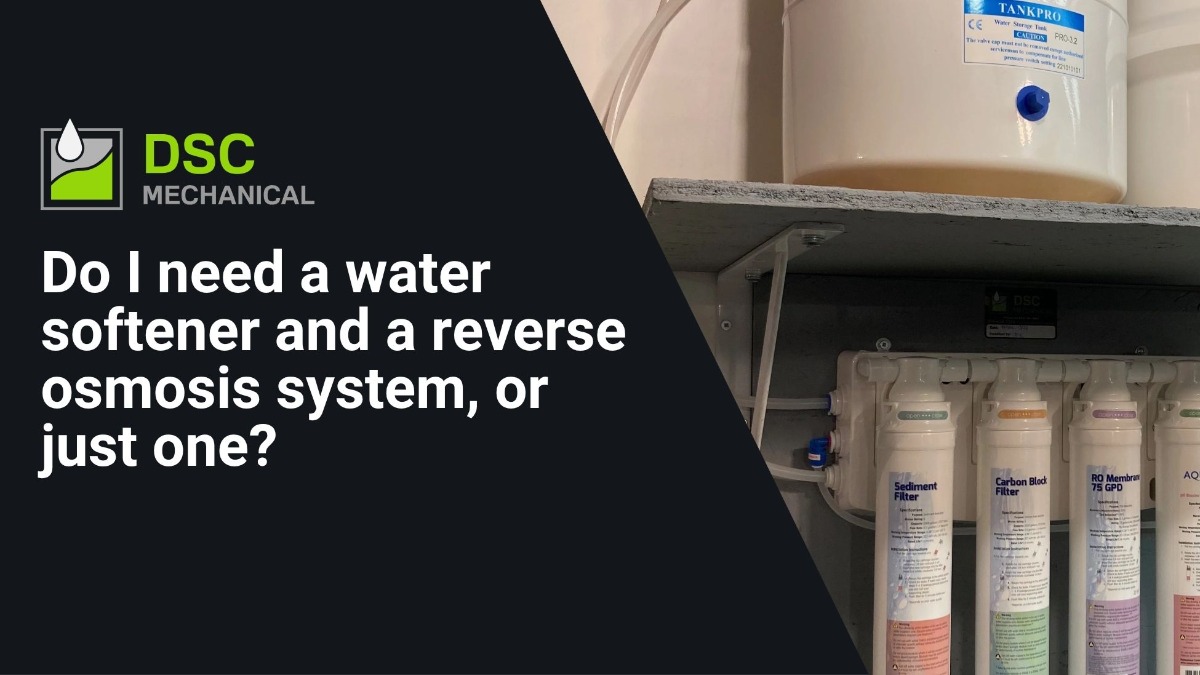
Rather than treating all of the water entering your home, an RO system is typically installed beneath your kitchen sink to provide highly purified drinking water through a separate faucet.
Reverse osmosis uses a specialized membrane and multiple stages of filtration to reduce many dissolved contaminants that may affect drinking water quality. Depending on your water source, this can include contaminants such as lead, arsenic, nitrates, sodium, chlorine, and other dissolved solids. It also improves the taste, smell, and clarity of your drinking water.
For homeowners who want greater confidence in the water they drink and cook with every day, a reverse osmosis system is one of the most effective treatment options available.
Water Softener vs. Reverse Osmosis: Which One Do You Actually Need?
The answer depends on the water problems you're trying to solve.
If your main concerns include hard water, scale buildup, soap scum, stained fixtures, shortened appliance lifespan, or dry skin, a water softener is likely the right solution.
If you're primarily concerned about drinking water quality, unpleasant taste, odors, or reducing certain contaminants from your drinking water, a reverse osmosis system is the better choice.
Because they solve different problems, these systems are not competitors. Instead, they complement one another.
Why Many Homeowners Choose Both Systems
For many properties throughout Manitoba and Northwest Ontario, installing both a water softener and a reverse osmosis system provides the most complete water treatment solution.
The water softener protects your home's plumbing, water heater, appliances, and fixtures by removing hardness minerals before the water is distributed throughout the house.
The reverse osmosis system then takes a portion of that softened water and provides exceptionally clean drinking water at a dedicated kitchen faucet.
Together, these systems improve the quality of both your household water and the water you drink every day.
Many homeowners find this combination delivers the best balance of comfort, appliance protection, and drinking water quality.
Why Water Testing Matters Before Choosing a System
Not every property has the same water conditions.
Some homes have very hard water but excellent drinking water quality. Others may have relatively soft water but elevated levels of iron, manganese, sulfur, nitrates, or other naturally occurring contaminants.
Properties supplied by private wells often have different treatment needs than those connected to municipal water systems. Cottage properties and rural homes throughout Manitoba and Northwest Ontario may also experience seasonal changes in water quality.
This is why professional water testing is so important.
Rather than guessing which system you need, a comprehensive water analysis identifies what's actually in your water and allows the right treatment solution to be recommended.
Can One System Replace the Other?
This is another common misconception.
A reverse osmosis system does not soften the water used throughout your home. Your showers, laundry, dishwasher, and plumbing will still be affected by hard water if you don't have a water softener.
Likewise, a water softener does not provide the same level of drinking water purification as a reverse osmosis system. Although softened water helps protect plumbing and appliances, it is not designed to reduce many of the dissolved contaminants that an RO system can address.
Because they perform different functions, one system cannot replace the other.
Choosing the Right Water Treatment Solution
Every property has unique water quality challenges.
A home in Winnipeg connected to municipal water may require a different solution than a cottage drawing water from a lake or a rural property using a private well. Commercial facilities and municipal buildings often have entirely different treatment requirements as well.
Working with experienced water treatment professionals helps ensure your equipment is properly sized, correctly installed, and designed to solve your specific water quality concerns.
Trust DSC Mechanical for Professional Water Treatment Solutions
If you're unsure whether you need a water softener, a reverse osmosis system, or both, the best place to start is with a professional water test.
Contact DSC Mechanical today to schedule a water analysis and speak with our experienced team. We'll help you understand your water quality, explain your options, and recommend the right system to provide cleaner water, protect your plumbing, and give you greater confidence in every drop that comes out of your tap.

Contact Us
Box 4439
Stonewall, Manitoba, Canada, R0C 2Z0
x 204-404-7019 A info@dscmechanical.com
