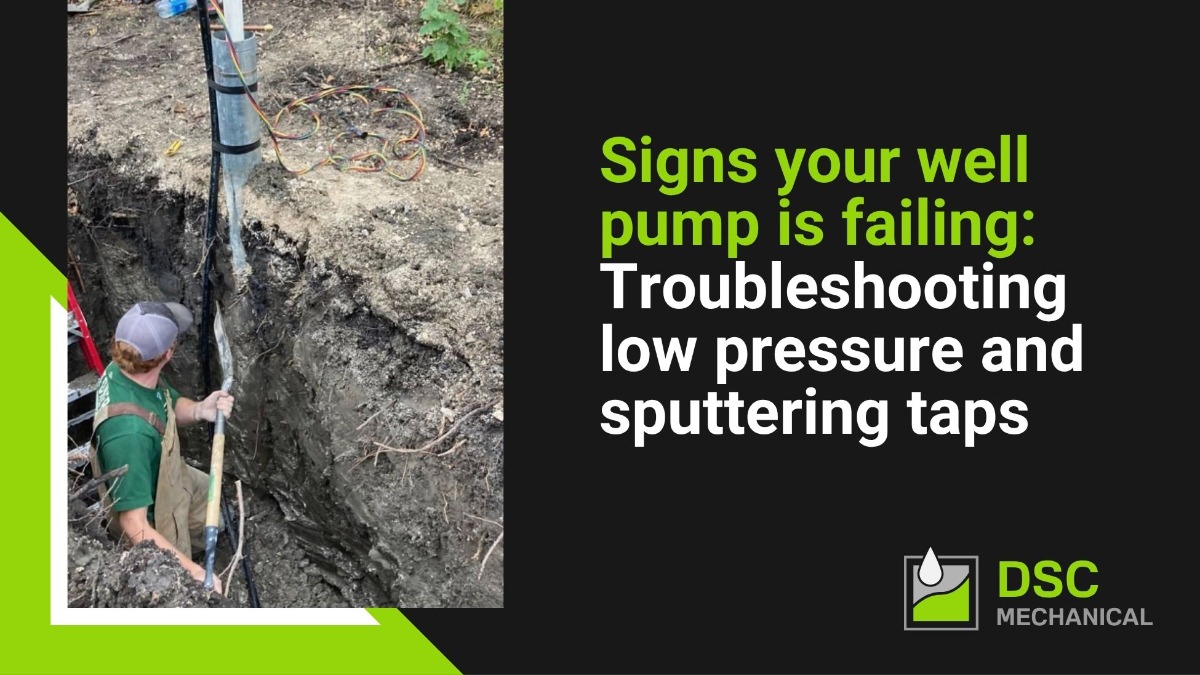
Signs your well pump is failing: troubleshooting low pressure and sputtering taps.
For homeowners, farms, acreages, cottages, and rural properties that rely on well water, the well pump is one of the most important components of the entire water system. When it is working properly, most people never think about it. However, when problems begin to develop, the signs often show up throughout the home in the form of low water pressure, sputtering faucets, inconsistent water flow, or unusual pump behavior.
Recognizing the early warning signs of a failing well pump can help prevent unexpected water outages, costly repairs, and potential damage to other components of your water system.
At DSC Mechanical, we help property owners across Winnipeg, Rural Manitoba and Northwest Ontario diagnose and resolve well water system issues, ensuring reliable access to clean water year round.
Why Your Well Pump Matters
A well pump is responsible for moving water from your well into your home or building. It works alongside pressure tanks, switches, filtration systems, and plumbing components to deliver consistent water pressure whenever you turn on a tap.
When the pump begins to fail, it can affect every part of the system. Water pressure may fluctuate, appliances may not perform properly, and access to water can become unreliable.
Because well pumps operate continuously over many years, normal wear and tear can eventually lead to performance issues that require attention.
Low Water Pressure Throughout the Property
One of the most common signs of a failing well pump is reduced water pressure.
If showers feel weaker than usual, faucets take longer to fill containers, or multiple fixtures cannot operate effectively at the same time, the well pump may no longer be delivering water efficiently.
Low water pressure can occur for several reasons, including:
- Aging or worn pump components
- Pressure switch problems
- Pressure tank issues
- Clogged filters
- Sediment buildup
- Electrical problems affecting pump performance
Because multiple issues can cause low pressure, a professional inspection is often necessary to determine the exact source of the problem.
Sputtering or Spitting Faucets
If your faucets occasionally spit air along with water, it is often a sign that air is entering the water system somewhere.
Sputtering taps may indicate problems such as:
- A failing well pump
- Low water levels within the well
- Cracked or damaged water lines
- Loose plumbing connections
- Pump intake issues
Air in the water system should never be ignored. While occasional sputtering may seem minor, it can signal developing issues that could worsen over time if left unaddressed.
Identifying the source early can help prevent more extensive repairs later.
Frequent Pump Cycling
A healthy well pump should operate in predictable cycles as water demand changes.
If the pump is constantly turning on and off, even when water use is minimal, it may be experiencing short cycling.
Frequent cycling can place additional strain on the pump and significantly shorten its lifespan.
Potential causes include:
- Pressure tank problems
- Faulty pressure switches
- Water leaks within the system
- Pump wear and deterioration
Ignoring short cycling often leads to increased energy consumption and accelerated equipment failure.
Rising Utility Costs
An aging or failing well pump often becomes less efficient over time.
As components wear out, the pump may need to work harder and run longer to maintain water pressure throughout the property.
This increased workload can result in higher electricity consumption and rising utility bills.
If your energy costs have increased without another obvious explanation, your well pump may be contributing to the problem.
A professional inspection can help determine whether equipment performance is declining and whether repairs or replacement may be necessary.
Strange Noises from the Water System
Unusual sounds should never be ignored.
Grinding, clicking, vibrating, humming, or other unfamiliar noises coming from the pump, pressure tank, or related equipment can indicate mechanical or electrical issues.
Some noises may signal normal wear and tear, while others can indicate failing components that require immediate attention.
Addressing these issues early may help prevent complete pump failure and reduce repair costs.
Dirty or Discoloured Water
Changes in water appearance can sometimes indicate problems with the well system.
If you notice sediment, sand, cloudiness, or discoloration in your water, the issue may be related to the pump, well casing, or groundwater conditions.
A failing pump may begin drawing sediment from lower levels of the well, allowing particles to enter the water supply.
Not only can this affect water quality, but it can also increase wear on plumbing fixtures, appliances, filtration systems, and other equipment.
Complete Loss of Water
In some cases, well pump failure occurs suddenly.
If no water comes from any fixture throughout the property, the pump may have stopped functioning entirely. However, other issues such as electrical failures, pressure switch problems, or system malfunctions can create similar symptoms.
A complete loss of water should be addressed as quickly as possible to restore service and prevent additional complications.
Professional troubleshooting can identify the root cause and determine the most effective solution.
When to Repair vs. Replace a Well Pump
Not every well pump issue requires full replacement.
Some problems can be resolved through repairs, component replacement, pressure tank servicing, or electrical troubleshooting. However, if the pump is approaching the end of its expected lifespan or experiencing recurring issues, replacement may provide a more reliable and cost effective long term solution.
Factors that often influence repair versus replacement decisions include:
- Age of the pump
- Frequency of repairs
- Overall system condition
- Water demand requirements
- Operating efficiency
A professional assessment can help determine the best course of action based on your property's specific needs.
Preventative Maintenance Helps Extend Pump Life
Like any mechanical system, well pumps benefit from regular inspection and maintenance.
Routine servicing can help identify small issues before they become major problems while ensuring all components are operating efficiently.
Preventative maintenance may include:
- Pressure system inspections
- Pressure tank testing
- Electrical system checks
- Water quality evaluations
- Pump performance assessments
- Filtration system inspections
Regular maintenance often helps extend equipment lifespan and reduce the likelihood of unexpected breakdowns.
Trust DSC Mechanical for Well Pump Troubleshooting and Repair in Winnipeg, Rural Manitoba and Northwest Ontario
When your water pressure drops, faucets begin sputtering, or your well system starts showing signs of trouble, prompt diagnosis is essential.
At DSC Mechanical, we provide professional well pump troubleshooting, repair, replacement, and water system services for rural properties, acreages, cottages, farms, and residential homes. Our experienced team can identify the cause of performance issues and recommend solutions that restore reliable water service.
Whether you're dealing with low water pressure, air in your water lines, pump cycling issues, or a complete loss of water, we can help get your system back to operating properly.
Schedule a Well System Inspection Today
Ignoring the early signs of a failing well pump can lead to more expensive repairs and unexpected water interruptions. If you've noticed low water pressure, sputtering taps, unusual noises, or other signs of well system trouble, DSC Mechanical is here to help.
Contact DSC Mechanical today at 204-404-7019 or by email at dale [at] dscmechanical [dot] com to schedule a well pump inspection and keep your water system operating efficiently and reliably for years to come.

Contact Us
Box 4439
Stonewall, Manitoba, Canada, R0C 2Z0
x 204-404-7019 A info [at] dscmechanical [dot] com
